
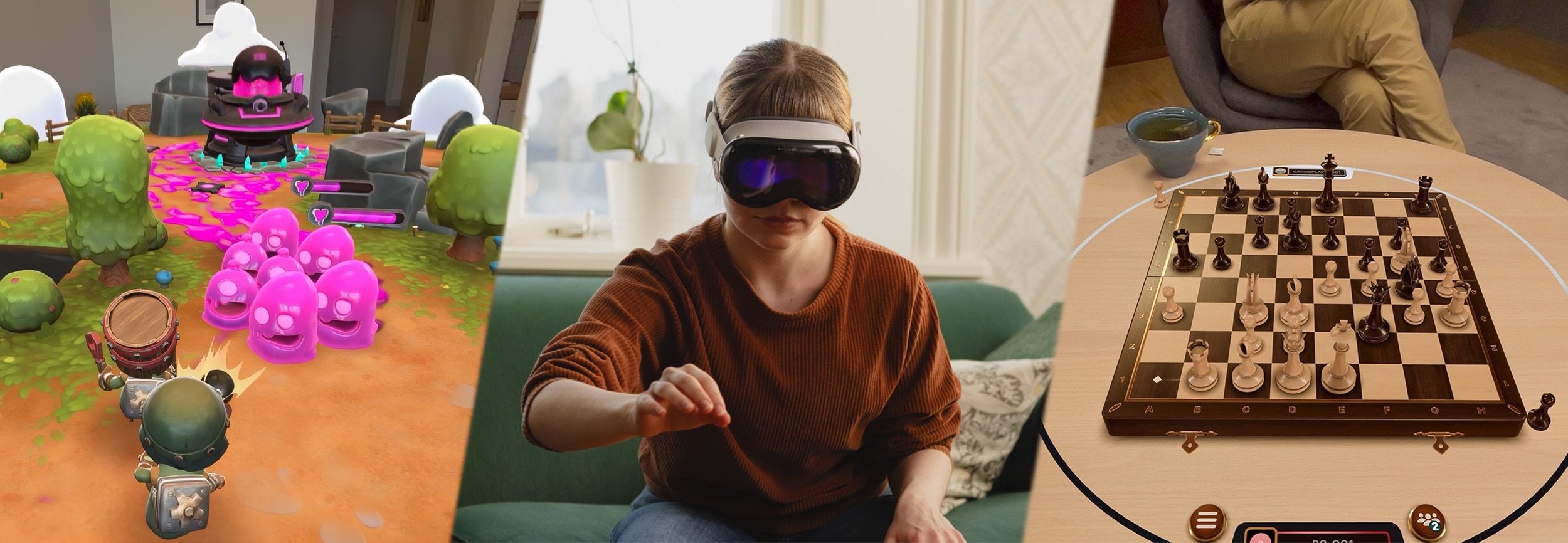
Casual games have long been a bridge between entertainment and everyday life. They are easy to approach, flexible in duration, and designed to fit naturally into short breaks or relaxed moments. With the arrival of spatial computing devices like Apple Vision Pro, casual games take on a new role. They are no longer limited to a flat screen but exist within a three-dimensional space that blends digital elements with the physical environment. Understanding which casual games work best on Vision Pro helps players, designers, and curious newcomers set realistic expectations and appreciate how this new platform changes familiar experiences.
What defines a casual game in spatial computing
Casual games are typically defined by accessibility rather than complexity. They rely on simple rules, intuitive interaction, and short learning curves. In spatial computing, these qualities become even more important. Wearing a headset is a different experience from holding a phone or controller, so games must respect comfort, clarity, and ease of interaction.
On Vision Pro, casual games usually share several characteristics:
- Sessions that can last a few minutes or be paused easily
- Clear visual focus without cluttering the user’s field of view
- Interaction based on natural gestures, eye tracking, or minimal hand movement
- Gameplay that does not require rapid reflexes or constant head motion
These traits make casual games suitable not only for gamers but also for users exploring spatial computing for productivity, creativity, or relaxation.
Understanding interaction on Vision Pro
To appreciate why certain casual games work better than others, it is important to understand how interaction differs from traditional gaming platforms. Vision Pro emphasizes gaze, hand gestures, and subtle movements rather than physical controllers. This design favors games that reward thought, pattern recognition, and attention over speed and precision.
Word games, logic puzzles, matching games, and light simulation experiences align well with this interaction model. They allow players to remain seated, keep their head relatively still, and interact with content that feels anchored in space rather than overwhelming.
Word games as a natural fit
Word games have always been popular in casual gaming because they combine mental engagement with low physical demand. On Vision Pro, this balance becomes even more valuable. Letters, grids, and words can be placed comfortably in the user’s visual field, scaled to readable sizes, and interacted with using simple gestures.
Common word game formats that translate well include:
- Crossword-style layouts that float like a board in front of the user
- Word search grids that encourage scanning and focus
- Anagram and letter-tile games where pieces can be selected naturally
- Daily challenge formats that support short, repeatable sessions
These games benefit from spatial clarity. Instead of scrolling or zooming, the player can adjust distance and placement, reducing eye strain and improving readability.
Puzzle and logic games in mixed reality
Beyond word games, logic and puzzle games are among the most comfortable experiences on Vision Pro. These games rely on reasoning, sequencing, or pattern recognition rather than fast reactions. In a mixed reality environment, puzzles can feel more tangible, as if they exist on a virtual desk or wall.
Examples of puzzle styles that work particularly well include:
- Tile-based logic puzzles with clear visual boundaries
- Number puzzles and grids that remain stable in space
- Shape-matching or spatial reasoning games with slow pacing
Because Vision Pro allows windows and game elements to coexist with the real environment, these games feel less isolating than traditional VR experiences.
Brain training and cognitive exercises
Casual brain training games often overlap with word and puzzle genres. Their goal is not competition but mental stimulation. Vision Pro’s emphasis on clarity and comfort supports this use case well, especially for adult users interested in maintaining focus or building healthy routines.
Brain training games benefit from:
- Calm visual design with high contrast and readable text
- Feedback that is informative rather than distracting
- Progress tracking that feels optional rather than demanding
These experiences align with Vision Pro’s broader positioning as a device for both work and leisure, allowing casual games to exist alongside productivity tools without friction.
Lightweight simulation and observation games
Some casual games focus less on solving problems and more on observation or gentle interaction. These include virtual aquariums, miniature worlds, or slow-paced management scenarios. On Vision Pro, such experiences can sit quietly in the environment, offering moments of relaxation without demanding full attention.
These games work best when they:
- Avoid constant notifications or forced interaction
- Respect the user’s physical surroundings
- Allow the player to engage passively or actively at will
This category highlights how casual gaming on Vision Pro can blur the line between games and ambient digital experiences.
Comfort and usability considerations
Not every casual game idea works well simply because it is simple. Comfort remains a central factor. Games that require excessive head movement, frequent refocusing, or dense visual layouts can cause fatigue over time.
Designs that succeed on Vision Pro typically:
- Keep primary content at a comfortable viewing distance
- Limit the number of active elements on screen
- Use consistent lighting and contrast to avoid eye strain
- Support seated play without requiring large gestures
For players, understanding these limitations helps set expectations. Vision Pro is not designed to replace long console gaming sessions, and casual games thrive when they respect that boundary.
Comparisons with traditional casual gaming platforms
Compared to mobile phones or tablets, Vision Pro offers a larger and more flexible visual space but demands more physical presence. Casual games that rely heavily on quick taps, scrolling, or constant notifications often feel less natural in spatial computing.
In contrast, games that emphasize:
- Thoughtful pacing
- Visual clarity over density
- Intentional interaction rather than repetition
tend to feel more comfortable and engaging. This does not make Vision Pro better or worse than traditional platforms, but different. Casual games succeed when they are adapted rather than directly copied.
Realistic expectations for players
Casual gaming on Vision Pro is still evolving. While the platform offers unique advantages in immersion and clarity, it also encourages moderation. Short sessions, focused experiences, and calm gameplay align best with both the hardware and the intended user experience.
Players should expect:
- Familiar casual genres presented in a new format
- Improved readability and spatial comfort for certain games
- A smaller but more intentional selection of suitable titles
Understanding these factors helps avoid disappointment and highlights where Vision Pro adds genuine value.
A quieter but deeper way to play
Casual games that work best on Vision Pro share a common philosophy. They respect the user’s time, attention, and physical comfort. Word games, puzzles, and cognitive exercises thrive because they benefit from space, clarity, and natural interaction rather than speed or spectacle.
As spatial computing becomes more common, these genres are likely to remain relevant precisely because they adapt well to different contexts and audiences. On Vision Pro, casual games are less about escaping reality and more about enhancing quiet moments within it.
