
Word puzzle games have long been associated with newspapers, quiet evenings, and moments of personal focus. Over time, they have evolved into a broad category of games enjoyed by adults of all ages, backgrounds, and skill levels. Today, word puzzle games are not only a source of entertainment but also a way to maintain mental agility, improve language skills, and create small but meaningful routines of cognitive engagement.
For adults balancing work, family, and digital overload, word puzzle games offer something distinct. They reward patience rather than speed, reflection rather than reaction, and understanding rather than memorization. This balance makes them particularly relevant in modern life, where many forms of entertainment demand constant attention and rapid responses.

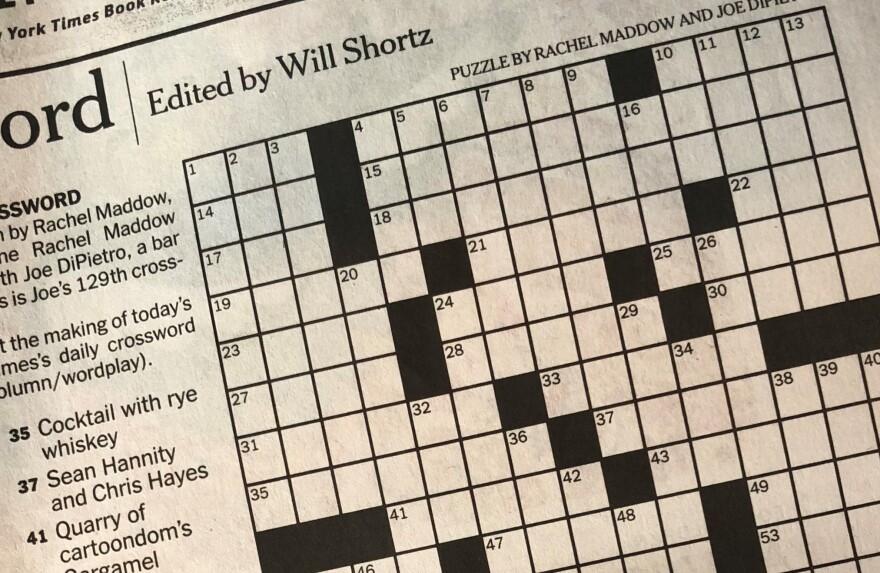


What defines a word puzzle game
A word puzzle game is any game in which language itself is the primary tool for progress. Players solve challenges by recognizing patterns, meanings, spellings, or relationships between words. Unlike action or strategy games, success is rarely based on reflexes. Instead, it depends on reasoning, vocabulary, and comprehension.
Common characteristics include structured rules, clearly defined goals, and a finite problem space. Each puzzle presents a challenge that can be solved through thought rather than trial and error. This sense of solvability is one reason word puzzle games appeal strongly to adults.
Common types of word puzzle games
Word puzzle games come in many forms, each emphasizing different skills and preferences. Some focus on vocabulary expansion, others on logic or deduction. While formats vary, the underlying appeal remains consistent.
Examples include:
- Crosswords that rely on definitions, wordplay, and general knowledge
- Word searches centered on pattern recognition
- Anagram-based puzzles where letters must be rearranged meaningfully
- Logic-driven word puzzles that combine language with structured reasoning
- Narrative word puzzles that integrate storytelling and choice
These variations allow players to select experiences that match their interests, whether linguistic, analytical, or creative.
Why word puzzle games appeal to adults
Adults often gravitate toward games that respect their time and intelligence. Word puzzle games typically allow flexible pacing, making them easy to fit into daily routines. A puzzle can be completed in minutes or revisited later without penalty.
Another factor is familiarity. Many adults encountered word puzzles early in life through books, magazines, or school activities. Returning to them can feel reassuring while still offering intellectual stimulation. Unlike games that rely on constant updates or competitive pressure, word puzzle games tend to feel stable and predictable in structure.
Cognitive engagement and mental habits
One of the most discussed aspects of word puzzle games is their relationship to cognitive activity. While they are not medical tools, they encourage habits associated with focused thinking, attention to detail, and problem-solving.
Regular engagement with word puzzles may support:
- Active recall of vocabulary and meanings
- Pattern recognition and inference
- Sustained concentration over short periods
- Mental flexibility when exploring alternative interpretations
For adults, these habits align well with lifelong learning and intellectual curiosity.
Vocabulary and language awareness
Word puzzle games naturally reinforce language exposure. Players encounter synonyms, uncommon terms, idiomatic expressions, and contextual clues. Over time, this exposure can sharpen sensitivity to language without formal study.
Unlike rote memorization, word puzzles place words in context. This contextual learning is often more memorable, especially when a solution is reached through reasoning rather than instruction.
Cultural relevance of word puzzles
Word puzzle games reflect language as it is used in society. Crosswords, for example, often incorporate references to history, literature, science, and everyday life. This makes them informal mirrors of cultural knowledge.
For adults, this cultural dimension adds depth. Solving a puzzle can feel like participating in a shared intellectual tradition that spans generations, publications, and platforms.
Digital formats and modern accessibility
While word puzzles originated in print, digital platforms have expanded their reach. Today, adults can access word puzzle games through mobile devices, tablets, and computers. Digital formats often introduce features such as adjustable difficulty, hints, and progress tracking.
These tools make word puzzle games more approachable for beginners while still satisfying experienced players. Importantly, most digital adaptations preserve the core mechanics that define the genre.
Word puzzle games and emerging platforms
As computing interfaces evolve, word puzzle games are gradually adapting to new environments, including mixed reality and spatial computing. On platforms such as Apple Vision Pro, word puzzles may appear as floating panels, interactive boards, or spatial objects within a user’s environment.
For adults unfamiliar with these technologies, the key difference lies in interaction rather than complexity. Instead of tapping or typing, players may use gaze, hand gestures, or voice input. The underlying logic of the puzzle remains unchanged, which helps preserve accessibility.
Comfort and usability considerations
When word puzzle games are played on immersive platforms, comfort becomes an important factor. Adults tend to favor experiences that minimize strain and allow relaxed posture.
Key considerations include:
- Clear, readable text at comfortable distances
- Minimal motion to reduce fatigue
- Seated play options
- Intuitive controls that do not require physical exertion
These elements ensure that the cognitive focus of word puzzles is not overshadowed by physical discomfort.
Practical use cases in daily life
Word puzzle games fit naturally into many adult routines. Some people use them as a morning warm-up, others as a way to unwind in the evening. Because puzzles are self-contained, they can be enjoyed without long-term commitment.
Common use cases include:
- Short breaks during workdays
- Travel or waiting periods
- Relaxation before sleep
- Shared activities with family members
This flexibility contributes to their long-term popularity.
Comparing word puzzles to other game genres
Compared to action, simulation, or competitive games, word puzzle games emphasize depth over spectacle. They rarely depend on graphics or sound effects to maintain interest. Instead, engagement comes from the satisfaction of understanding and completion.
For adults seeking low-pressure entertainment, this distinction is significant. Word puzzles provide challenge without urgency and engagement without overstimulation.
Limitations and realistic expectations
While word puzzle games offer many benefits, they are not universal solutions. They may feel repetitive to some players or limited by language proficiency. Others may prefer more social or dynamic experiences.
Understanding these limitations helps set realistic expectations. Word puzzle games are best viewed as one component of a balanced range of activities rather than a replacement for all forms of mental engagement.
Long-term relevance of word puzzle games
The enduring appeal of word puzzle games lies in their simplicity and adaptability. Language evolves, but the human enjoyment of solving problems with words remains constant. Whether printed on paper or projected into a spatial interface, the core experience endures.
For adults, this consistency provides a reliable form of engagement that can evolve alongside personal interests and technological change.
Rather than chasing trends or novelty, word puzzle games continue to offer something steady: a quiet challenge, a moment of focus, and a reminder that thinking itself can be enjoyable.
